
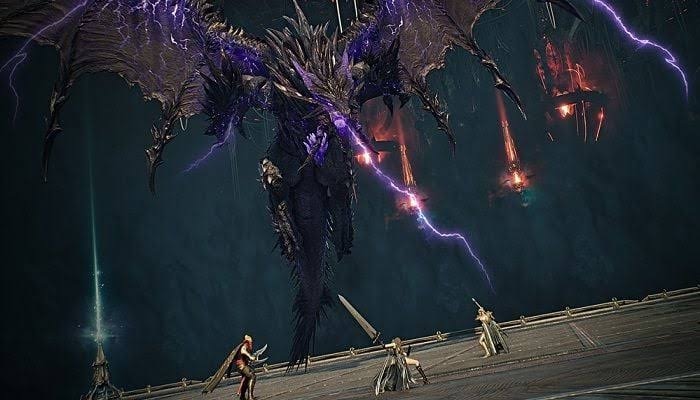
AION 2’s Ludra encounter rewards clear assignments and controlled movement. Before pulling, give every player an orb area, a tile-search route and a colour-side assignment. Preserve those responsibilities when mechanics overlap instead of leaving collection or safe-position searches to whoever reacts first.
Choose Your Difficulty Before Preparing the Group
The Global announcement confirms minimum item levels of 2,800 for Normal and 3,000 for Hard. These are entry requirements, not recommended gear targets for a first clear.
The November 18 update added Easy difficulty, with a two-hour limit, a minimum item level of 2,800 and unlimited personal revives. The earlier version of this article omitted that addition. Check the difficulty selected by your group before applying a strategy or planning consumables.
Use the entry screen to confirm reward eligibility, remaining entries and revival rules. Avoid basing the session on an older weekly schedule or assuming all difficulties use identical recovery conditions.
Assign Mechanics Before the Pull
Give the group one consistent arena reference, such as minimap north. Camera-relative instructions become confusing as players turn or change positions.
| Responsibility | Suggested assignment | Backup plan |
|---|---|---|
| Red orb | A designated defensive player | Name a replacement before combat |
| Blue orbs | Separate collection areas | Reassign an uncovered area immediately |
| Bingo search | Starting tiles and travel directions | One caller announces the safe location |
| Colour movement | Fixed red and blue sides | Keep distinct crossing lanes |
| Regrouping | One agreed marker | Return after completing individual duties |
This is a planning template rather than a required composition. Adapt it to your group’s available defensive tools and the mechanics shown in the selected difficulty.
Spread healing and utility between the two parties. During progression, a dependable recovery option in each group is more useful than concentrating every support tool on one side.
Cover Falling Orbs Without Overlapping Collectors
Use distinct areas for orb collection. “Take the far orb” is ambiguous; a fixed sector gives the collector and replacement a clear destination.
When an orb appears, confirm its assigned player before spending movement to reach it. If a replacement takes over, announce the change so the original collector can stop moving toward the same point.
The available fight descriptions distinguish blue pickups from a red orb requiring a defensive response. However, the reviewed material does not establish every post-rework skill interaction. Do not assume any immunity or block automatically works without confirming it for your class and difficulty.
A useful practice rule is to preserve one movement or defensive option for the assignment. After collecting, restore your position rather than remaining isolated at the edge of the arena.
Search Bingo Tiles With a Repeatable Pattern
For Bingo, divide the search area before combat. Assign starting positions and a direction of travel so players reveal different cells rather than checking the same section.
Place a targeted attack on an unrevealed tile, move after the position locks and continue along the assigned route. Once the safe location is identified, call it using the agreed orientation.
“Northwest outer tile” gives the group a destination. A vague call such as “here” forces players to search for the speaker while moving.
Do not build the strategy around the old 50% and 25% thresholds. The official Global rework changed mechanics and attack patterns, while the reviewed encounter descriptions do not independently verify all current phase timings.
If another responsibility remains active during the search, keep its collector assigned. Finding the safe tile should not cause the entire group to abandon an unfinished mechanic.
Maintain Red and Blue Separation
Set colour sides in advance and follow your own assignment when marks appear. Keep an open route for each group so a shared dodge does not funnel everyone through the same gap.
During a sweeping attack, move far enough to clear the danger while preserving separation. Players arriving from the opposite side need space to pass through their own lane.
For matching-colour protection, watch the actual cast and zone behaviour. Entering too early can be as unhelpful as arriving late if protection has a limited duration. Exact occupancy limits and timing should be confirmed in the selected difficulty rather than imported from an earlier regional strategy.
Protect Your Damage Windows
Choose a position that supports both attacking and your next assignment. An extra cast is rarely useful if it leaves you unable to reach an orb or search area.
Keep your recovery movement short. After a mechanic, return to a position from which you can see the boss and your assigned section of the arena. Watch multi-hit patterns until the full sequence finishes before moving back into melee range.
If damage drops sharply during mechanics, inspect unnecessary travel before rebuilding everyone’s equipment. Clear destinations and shorter routes can create additional attacking time without sacrificing defensive options.
Prepare Equipment and Consumables
Build around the job you must perform. Collectors need reliable movement, defensive players need the relevant cooldown available, and support players need enough resources for repeated recovery.
Reserve Aion 2 Kinah for equipment preparation and consumables across your planned attempts. If you choose to purchase cheap Aion 2 Kinah, budget around those supplies while handling encounter assignments separately.
For reward planning, use the current in-game preview and Substance Morph recipes. The November 18 update changed weapon-selection exchanges, so an older voucher or currency estimate may no longer match the displayed recipe.
Review the First Missed Assignment
After an attempt, identify the earliest action that disrupted the group rather than focusing only on the last death.
An uncovered orb calls for clearer coverage. Duplicate tile searches call for different starting positions. Crossed colour routes call for wider separation. Players returning into repeated attacks need a better visual cue for when the sequence ends.